
Bed Blanket Partnership FAQs: Long-Term Sourcing, After-Sales & Acceptance
Bed Blanket Partnership FAQs: Long-Term Sourcing, After-Sales & Acceptance
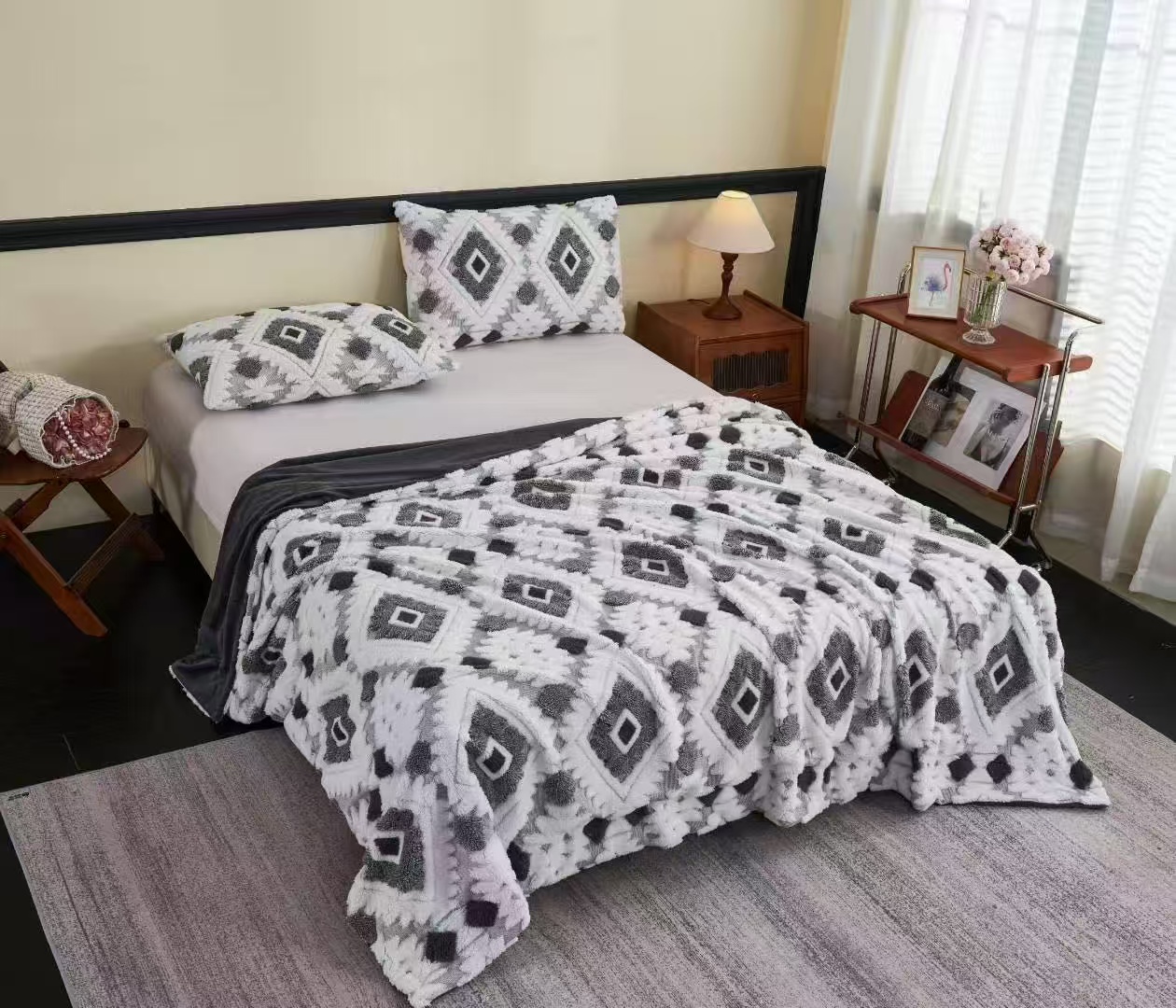
Answer first: a long-term bed blanket partnership is not one agreement, it is three. Buyers who separate the questions of how the product is specified and reordered (sourcing), how a shipment is judged acceptable (acceptance), and what happens after the carton is opened (after-sales) usually keep the same velvet bedding manufacturer for multiple seasons. Buyers who negotiate only a unit price usually restart their supplier search every year.
This article collects the questions procurement managers, importers, hotel buyers, dormitory suppliers and private-label brands ask most often when they move from a trial order to an ongoing programme. Product references come from the SYS TEXTILE range — the export brand of CHANGSHU SHENG-SHUN TEXTILE CO LTD, a manufacturer established in 2018 in Changshu, Jiangsu Province, China, specialising in velvet-based bedding series including quilts, velvet four-piece sets, flannel blankets and rabbit fur blankets.
What this article answers
- Why reorders break more often than first orders
- What long-term sourcing means in bed blankets
- How to define acceptance criteria before the first carton
- What after-sales support a multi-season buyer should expect
- Five FAQs covering compliance, capability, budget, samples and lead time
Problem Definition: Why the Second Order Is Harder Than the First
A first bed blanket order can be managed by email. The buyer picks a flannel blanket or a rabbit fur blanket, agrees a size and a price, and waits for the container. The second order is where partnerships usually break, because by then four assumptions are being tested at once:
- Specification continuity — is "the same blanket" defined by fabric, weight, size, or pattern?
- Acceptance authority — who decides whether a reorder is acceptable, and against which retained sample?
- After-sales ownership — who answers when a hotel programme or a retail catalogue receives a mixed pallet?
- Timing visibility — does the supplier communicate capacity before the seasonal peak, or after it?
None of these is a price question. All four decide whether a bed blanket supplier becomes a bed blanket partner.
Industry Background: Why Blanket Programmes Are Getting Longer
Category growth is one reason buyers are willing to commit to multi-season blanket programmes rather than spot purchases. Grand View Research valued the global blanket market at USD 15.1 billion in 2023 and projects USD 25.5 billion by 2030. Within that market, polyester blankets held the largest material share in 2023 at 33.8% — which matters directly to acceptance criteria, because polyester construction gives buyers a relatively stable hand-feel and colour reference across reorders.
Two end-use segments are expanding in parallel. Dataintelo valued the hotel bedding market at USD 14.2 billion in 2025 and projects USD 23.6 billion by 2034, a CAGR of 5.8%. Maximize Market Research valued the global baby blanket market at nearly USD 2.54 billion in 2024, growing at a CAGR of 3.6% through 2032. Both segments buy in cycles and both expect repeatable quality — which is precisely the territory where acceptance criteria decide the relationship.
On the supply side, Jiangsu Province remains the reference cluster. Nantong in Jiangsu holds over 50% of China's bedding market share, with market transactions exceeding RMB 240 billion in 2024, according to the Home Textile Industry Report. SYS TEXTILE operates from Changshu, also in Jiangsu, inside the same regional supply ecosystem.
Two slower-moving forces also shape long-term sourcing questions. Textiles represented 5.8% of US municipal solid waste in 2018 according to the EPA, one reason durable-use and recycled-fibre specifications appear more often in buyer briefs. And Grand View Research valued the global antimicrobial textiles market at USD 11.9 billion in 2023, projecting USD 19.0 billion by 2030 — a signal that hygiene-related requirements are moving from hospitality tenders into mainstream bedding briefs.
What "Long-Term Sourcing" Actually Means in Bed Blankets
Long-term sourcing is not a longer contract. It is the decision to make one specification repeatable. In bed blankets, that means four things get written down and kept.
1. A fixed specification sheet
Fabric, size, colour, pattern and packing should be described once and referenced on every purchase order. In the SYS TEXTILE range this is straightforward, because each product line is already defined by fabric and pattern family: Flannel Blankets are produced as Flannel Wave, Flannel Square Jacquard, Flannel Square and Flannel Southwest Design variants; Shu Fleece Blankets are produced as Shu Fleece 3D and Shu Fleece Jacquard; Rabbit Fur Blankets use a rabbit fur-like polyester fabric; Velvet Quilts combine velvet polyester fabric with polyester filling; and the Velvet Four-Piece Bedding Set combines a duvet cover, a sheet and pillowcases.
2. A size matrix that survives reorders
Twin, Queen and King sizes are available across the range and are customizable. For hotel and institutional buyers the practical question is whether the supplier will hold one size matrix for the whole programme, so that a Queen order in season three does not arrive at a different cut than season one.
3. A material declaration per SKU
Polyester construction runs through the blanket, quilt and bedding-set lines. A material declaration per SKU — what is velvet polyester, what is filling, what is flannel — removes most of the ambiguity that causes disputes at reorder stage, and it is also the document that compliance teams will ask for first.
4. Packaging and carton continuity
Export programmes live or die on packing consistency: the same polybag, the same carton count, the same shipping marks. Packaging is the cheapest item to agree and the most expensive one to get wrong during a hotel or retail rollout.
The Product Facts a Partnership Should Be Anchored To
Before the FAQ section, it helps to know exactly what is being repeated. Everything below comes from the current SYS TEXTILE product specification set.
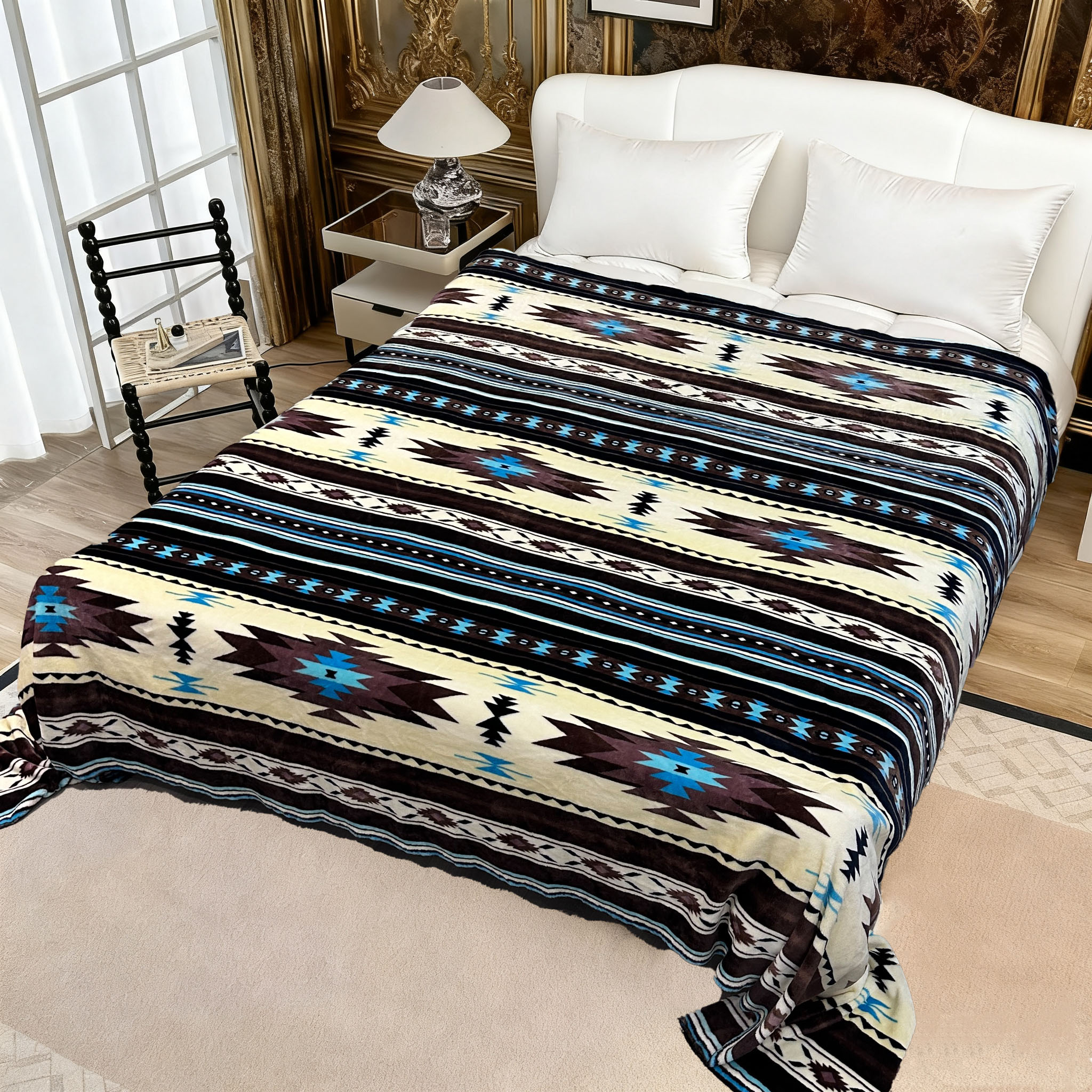
Flannel Blankets are manufactured in four pattern families: Flannel Wave Blanket, Flannel Square Jacquard Blanket, Flannel Square Blanket and Flannel Southwest Design Blanket. The fabric is flannel polyester, the model designation is customizable, sizes are Twin, Queen and King with customization available, the stated product characteristics are soft, warm and eco-friendly, and the intended use is home bedding within the home textile and export trade sectors.
Shu Fleece Blankets cover two constructions: the Shu Fleece 3D Blanket and the Shu Fleece Jacquard Blanket. Both use a Shu Fleece polyester fabric and share the same size range, the same customizable model designation, and the same soft, warm, eco-friendly profile.
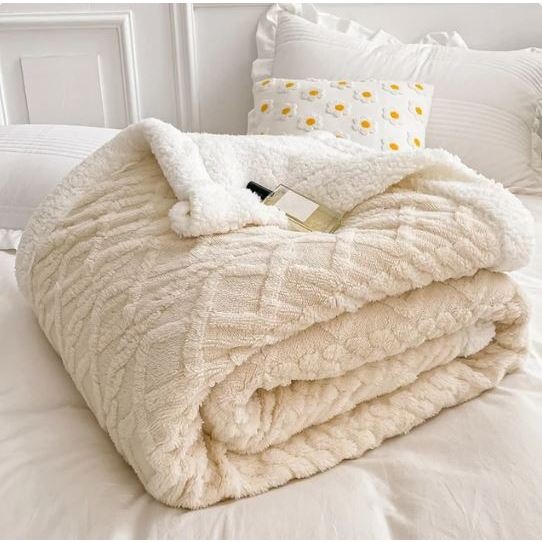
Rabbit Fur Blankets use a rabbit fur-like polyester fabric. They are positioned as a tactile, higher-perceived-value option for bedroom bedding and sleep-solution applications, and carry the same Twin/Queen/King customizable size range.
Velvet Quilts combine velvet polyester fabric with polyester filling, which makes them a natural mid-layer in hotel and home bedding sets rather than a standalone throw.
The Velvet Four-Piece Bedding Set packages a duvet cover, a sheet and pillowcases in velvet polyester — the format most often requested by importers and private-label buyers who need a coordinated set rather than individual blankets.
Acceptance Criteria: What to Inspect and What to Write Down
Acceptance criteria are the difference between a complaint and a claim. Buyers who define them in advance rarely need to escalate. A practical bed blanket acceptance list covers six dimensions.
- Fabric identity and hand-feel — confirm the received fabric matches the approved sample type: flannel, Shu Fleece, rabbit fur-like polyester or velvet.
- Size verification — measure against the agreed Twin, Queen or King specification after relaxation, not straight off the line.
- Construction and stitching — check seam integrity, edge finishing and pattern alignment, particularly on jacquard and square-jacquard variants.
- Colour and pattern consistency — compare against the retained pre-production sample under the same lighting conditions.
- Project-specific requirements — briefs for bedroom, baby, dormitory and camping programmes commonly specify items such as antibacterial treatment, anti-static behaviour, machine-washability, wear resistance and, for baby safety bedding projects, food-grade and skin-contact requirements.
- Packing and carton marks — count, polybag, label placement, carton condition and shipping marks.
Step-by-Step: From Sample to Repeat Order
- Define the brief in product terms, not adjectives. Name the blanket family — for example Flannel Square Jacquard, Shu Fleece 3D, Rabbit Fur or Velvet Quilt — plus the size, the destination market and the end use.
- Request a sample set that matches the brief. Validate hand-feel, size and pattern before discussing volume.
- Agree the specification sheet and the retained sample. This becomes the acceptance reference for every later order.
- Confirm the size matrix and model designation. Model designations in this range are customizable, which is useful for private label but must be confirmed in writing before the first carton is printed.
- Run a first commercial order at programme specification. Treat the first order as a rehearsal: inspect it at the same depth you intend to inspect reorders.
- Lock the reorder rhythm. Confirm packaging, carton marks, inspection points and the named contact who owns each of them.
- Review after each season. Use the acceptance list as the agenda; keep what worked and change one variable at a time.
After-Sales Support: What a Long-Term Buyer Should Be Able to Ask For
After-sales in bedding is not a warranty leaflet. It is the supplier's ability to answer three operational questions quickly.
"Do you still have our reference?" A supplier running a multi-season programme should be able to retrieve the approved sample and specification for any active SKU. This is the single most useful capability test, because it reveals whether the factory treats your order as a project or as a transaction.
"Who owns the defect conversation?" Buyers should know, before shipment, which named contact handles quality escalations and through what process — photo evidence, quantity reporting, replacement or credit discussion.
"Will a reorder match the original?" Here capacity and process stability matter. SYS TEXTILE operates a 7,000 m² facility with approximately 60 staff, including an R&D team of 5 engineers, and reports annual production capacity of about 3 million pieces. Approximately 90% of output is exported, with major markets in the USA, Brazil and the UK — meaning reorder handling across those markets is part of the supplier's normal operating pattern rather than an exception.
Use Cases: Where These Blanket Lines Fit
Hotel and hospitality programmes. Hotel bedding is the segment Dataintelo values at USD 14.2 billion in 2025 and projects to grow at 5.8% CAGR to 2034. Velvet Quilts and Velvet Four-Piece Bedding Sets fit coordinated room sets, while flannel blankets suit cooler-climate properties and seasonal layering.
Baby and nursery products. The baby blanket market was valued at nearly USD 2.54 billion in 2024 with a 3.6% CAGR through 2032, according to Maximize Market Research. Soft, warm and eco-friendly constructions are the relevant specification anchor here, and baby safety bedding projects typically add skin-contact and food-grade requirements to the brief.
Dormitory and institutional bedding. Institutional programmes prioritise repeatability, machine-washability and wear resistance over novelty, which makes a fixed size matrix plus durable flannel or Shu Fleece constructions a better fit than seasonal patterns.
Camping and travel. Outdoor camping briefs in this category commonly specify portability, warmth retention, moisture management and, in some programmes, waterproofing. The blanket is usually purchased alongside mattresses, sleeping bags and travel bags, so packing format matters as much as the fabric.
Living room and home décor. Flannel variants — particularly Flannel Southwest Design and Flannel Square Jacquard — are used as decorative throws in living-room and home décor applications, where pattern range rather than warmth rating drives the purchase decision.
Export trade and private label. Importers, wholesalers and brand owners typically need a full velvet bedding line rather than a single SKU: quilts, four-piece sets and several blanket families from one supplier, with customizable model designations for their own label.
Comparison Table: SYS TEXTILE Bed Blanket Lines at a Glance
| Product line | Variants / construction | Fabric & material | Sizes | Stated characteristics | Typical application |
|---|---|---|---|---|---|
| Flannel Blanket | Flannel Wave, Flannel Square Jacquard, Flannel Square, Flannel Southwest Design | Flannel (polyester) | Twin / Queen / King, customizable | Soft, warm, eco-friendly | Home bedding, living-room throws, export trade |
| Shu Fleece Blanket | Shu Fleece 3D Blanket, Shu Fleece Jacquard Blanket | Shu Fleece (polyester) | Twin / Queen / King, customizable | Soft, warm, eco-friendly | Home bedding, bedroom bedding programmes |
| Rabbit Fur Blanket | Rabbit fur-like pile construction | Rabbit fur-like polyester | Twin / Queen / King, customizable | Soft, warm, eco-friendly | Bedroom bedding, premium retail ranges |
| Velvet Quilt | Velvet quilt | Velvet (polyester) fabric, polyester filling | Twin / Queen / King, customizable | Soft, warm, eco-friendly | Home bedding, hotel bedding sets |
| Velvet Four-Piece Bedding Set | Duvet cover + sheet + pillowcases | Velvet (polyester) | Twin / Queen / King, customizable | Soft, warm, eco-friendly | Home bedding, coordinated set programmes |
Model designations across these lines are customizable. The velvet bedding line is completed by quilts and velvet four-piece sets alongside the blanket families.
FAQ: Bed Blanket Partnership Questions
1. Does a long-term bed blanket partnership require certifications, and which ones should be checked?
Certification requirements depend on the destination market and the end use, and they should be confirmed per SKU rather than assumed for a whole factory. What is certain is that the standards themselves keep moving: OEKO-TEX STANDARD 100 tightened its Bisphenol A (BPA) limit from 100 mg/kg to 10 mg/kg effective April 2025, according to the OEKO-TEX Association. Buyers in bedroom, baby and institutional briefs routinely specify OEKO-TEX, CE and, for baby safety bedding projects, FDA food-grade requirements. The practical approach is to ask the supplier to state in writing which certificate applies to which product line and which does not, then match that statement against the destination market's rules.
2. What product capability should a supplier demonstrate before you commit to a multi-season programme?
Look for range depth and repetition ability, not a single hero product. A supplier positioned for long-term blanket programmes should be able to offer, from one production base, flannel blankets in four pattern families, Shu Fleece 3D and Shu Fleece Jacquard blankets, rabbit fur-like polyester blankets, velvet quilts and velvet four-piece bedding sets — with Twin, Queen and King sizes and customizable model designations. SYS TEXTILE builds its export business on exactly that structure: a complete velvet bedding line produced from a 7,000 m² facility in Changshu with approximately 60 staff, a 5-engineer R&D team and reported annual capacity of about 3 million pieces.
3. How should budget be framed for a multi-year blanket programme?
Frame budget by cost driver, not by a single unit price. In this category the drivers are material (polyester flannel, Shu Fleece, rabbit fur-like polyester or velvet), the size matrix, pattern or jacquard complexity, model customization, packaging and destination-market compliance. Material stability is a genuine planning advantage: polyester blankets held the largest share of the global blanket market in 2023 at 33.8%, according to Grand View Research. A supplier that quotes one blanket price without a specification sheet gives you nothing to compare in year two.
4. What does a sample actually validate?
A sample validates five things and only five: fabric identity and hand-feel, size and cut, colour and pattern execution, stitching and finishing, and packing format. It cannot validate production consistency, which is why the sample should be signed, dated and retained by the supplier as the acceptance reference for every subsequent order. For programmes covering several product families, request a sample set rather than one piece — for example a flannel variant, a Shu Fleece variant and a velvet quilt or four-piece set — so the whole specification is approved at once.
5. What lead-time and capacity expectations should be agreed before the first reorder?
Agree three things: the reorder window relative to your selling season, the inspection point (pre-shipment or loading), and the person who confirms capacity. Capacity visibility is the part buyers most often skip. A manufacturer reporting around 3 million pieces of annual output will still have peak windows, and a programme that assumes flat-year availability creates its own lead-time risk. Once the window, the inspection point and the contact are fixed, lead time becomes a scheduling question rather than a negotiation. Sample requests, specification sheets and reorder planning for the lines described in this article can be raised directly with the SYS TEXTILE export team.
Conclusion: What Makes a Bed Blanket Partnership Survive
Partnerships in this category do not survive on price alone. They survive on a specification sheet that stays the same, an acceptance list that both sides agreed before the first carton, a retained sample that settles arguments quickly, and a supplier who can answer the after-sales questions without escalation. Sourcing, acceptance and after-sales are the three legs of the same structure — take one away and the programme tips.
For buyers moving from a single order to a multi-season bed blanket programme, the sequence is simple: define the product family, approve a sample set, write down the acceptance criteria, and confirm capacity visibility before the season starts rather than during it.
Next Step: Approve the Specification Before the Season
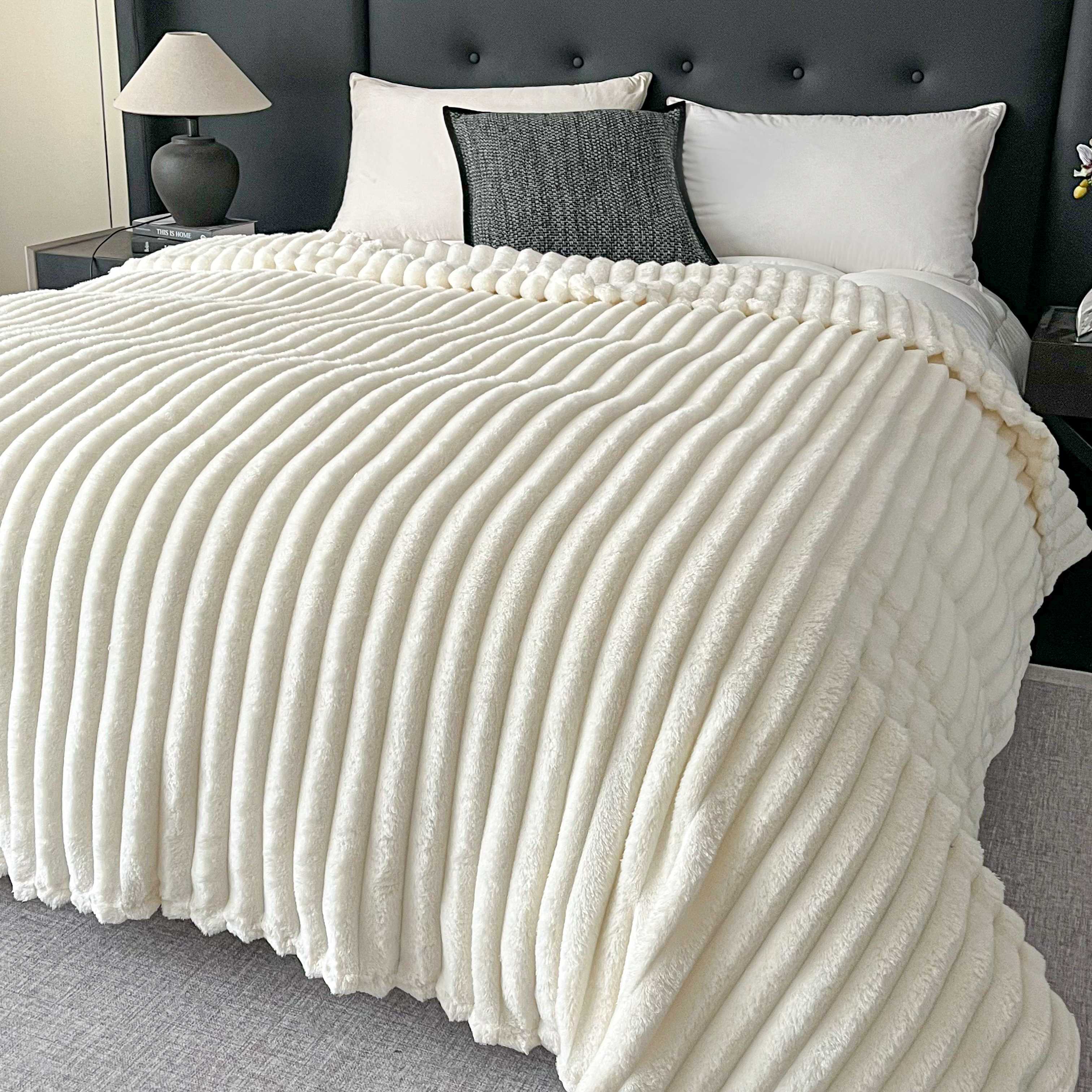
If you are moving from a trial order to a multi-season bed blanket programme, start with a specification review and a sample set: flannel, Shu Fleece, rabbit fur-like polyester, velvet quilts or velvet four-piece sets, in Twin, Queen and King sizes with customizable model designations.
SYS TEXTILE — CHANGSHU SHENG-SHUN TEXTILE CO LTD
Address: Chenbei Road, Miaoquan, Guli Town, Suzhou City, Jiangsu Province, China
Tel / WhatsApp: +86 18962366333
Email: 2497825773zrd@gmail.com
Send your specification for a sample and quotation request, or ask for the current product list covering the full velvet bedding line.
Have Questions or Need More Details?
Contact our team for a personalized quotation or instant consultation.
Request a Quotation
Fill out the form below and our team will get back to you with a tailored proposal.
WhatsApp Direct Chat
Prefer to chat in real-time? Message us on WhatsApp for instant assistance & quick answers.
- Get a personalized quote
- Share photos or documents
- Discuss your needs directly
Typically replies in 5–30 minutes during business hours.