
Material Science of Bed Blankets: Polyester Velvet, Shu Fleece & Flannel Construction
Material Science of Bed Blankets: Polyester Velvet, Shu Fleece & Flannel Construction
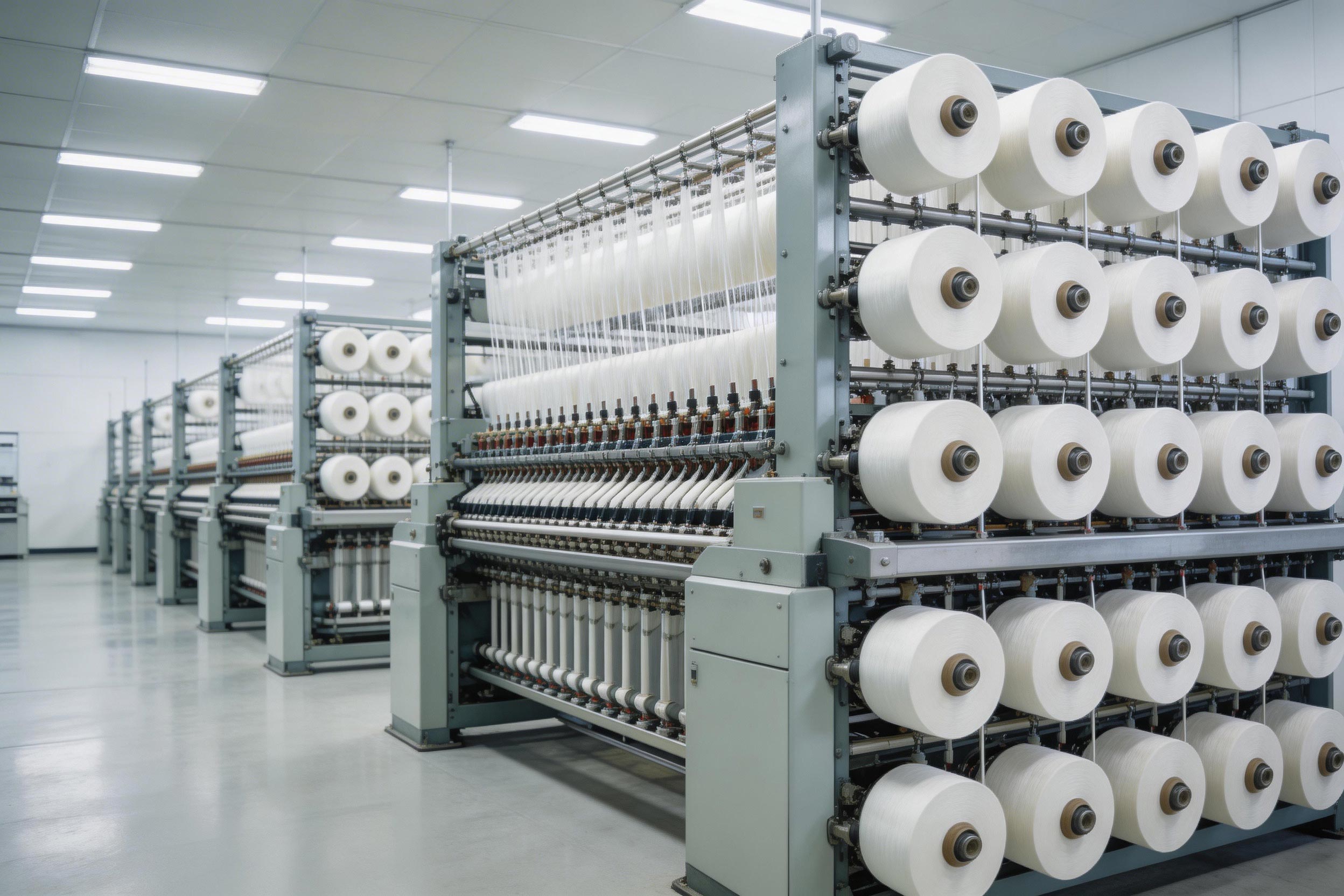
Factory overview — CHANGSHU SHENG-SHUN TEXTILE CO., LTD., Changshu, Jiangsu, where velvet, fleece and flannel bed blanket programs are produced.
A bed blanket feels soft or warm because of how its fabric is built, not only because of the fiber named on the label. Three surface structures dominate today's velvet bedding category: cut-pile polyester velvet, knit-pile Shu Fleece, and brushed flannel. Each one traps still air in a different way, and that mechanical difference decides how much warmth a blanket delivers per unit of weight, how it drapes over a mattress, and how its surface survives repeated laundering.
CHANGSHU SHENG-SHUN TEXTILE CO., LTD. — trading as SYS TEXTILE — is a Changshu-based manufacturer of velvet bedding founded in 2018. The company runs a 7,000 m² factory with approximately 60 employees and a five-engineer development team, produces around 3 million pieces per year, exports roughly 90% of its output to markets including the USA, Brazil and the UK, and manufactures blanket families such as SHU FLEECE 3-D BLANKET, SHU JACQUARD BLANKET, FLANNEL WAVE BLANKET, FLANNEL SQUARE JACQUARD BLANKET, FLANNEL SQUARE BLANKET and FLANNEL SOUTHWEST DESIGN BLANKET, alongside quilts and velvet four-piece sets.
This article is written for the evaluation stage of a buying decision. It explains how each of the three constructions is built, how that construction translates into softness and warmth in home bedding, and how dimension choices interact with different bed configurations — the three variables a buyer has to settle before comparing suppliers on price.
Problem Definition: Why "Soft Blanket" Is Not a Specification
Velvet, fleece and flannel are not fiber names and not product names. They describe a surface structure, and the same word can hide more than one build. A bedding velvet may be a knit with a raised pile or a woven ground with a cut pile. In the home textile trade, "flannel" commonly refers to a brushed fabric rather than the wool flannel used in apparel. Shu Fleece is a fleece construction with a lofted, textured face rather than a flat weave.
When a purchase specification stops at a name, three failures tend to appear after the container arrives:
- Warmth mismatch. A light knit fleece and a dense pile velvet can carry the same product name and still perform as different seasonal layers. Matching the wrong one to a winter home bedding program produces returns.
- Hand-feel drift between lots. Pile height, pile density and the degree of brushing are process variables. If the specification does not define the surface, two production runs can feel different to the end user even when the fiber content is identical.
- Dimensional mismatch. A throw-sized blanket and a tuck-in blanket can share a fabric and still fail on the same bed. Sizing is a separate specification decision from material selection, and it is usually made too late.
The decision this article supports is therefore narrow: given a defined bedding configuration and a warmth target, which of the three constructions should be specified, and what evidence should be on the table before a purchase order is released.
Industry Background: What the Bedding Market Is Signalling
The global blanket market was valued at USD 15.1 billion in 2023 and is projected to reach USD 25.5 billion by 2030, according to Grand View Research. Within that market, polyester blankets held the largest share at 33.8% in 2023 — a useful signal for buyers because it explains why velvet, fleece and flannel development is concentrated in polyester-based constructions rather than in wool or cotton pile.
Demand is not evenly distributed across end uses. The hotel bedding market was valued at USD 14.2 billion in 2025 and is projected to reach USD 23.6 billion by 2034 at a compound annual growth rate of 5.8%, according to Dataintelo. Hospitality purchasing is driven by laundry durability and repeatable hand feel rather than by novelty, which is why construction control matters more in that segment than color trends. The baby blanket market, valued at nearly USD 2.54 billion in 2024 and expected to grow at a CAGR of 3.6% through 2032 according to Maximize Market Research, adds a compliance-heavy segment where documentation is part of the product specification.
Two further trends are visible in the data. The global antimicrobial textiles market was valued at USD 11.9 billion in 2023 and is projected to reach USD 19.0 billion by 2030, according to Grand View Research — growth that has produced a large number of loosely defined "antibacterial" blanket offers, which makes finish documentation a genuine evaluation criterion. Separately, textiles represented 5.8% of total Municipal Solid Waste in the USA in 2018 according to EPA data, a figure that continues to support recycled fiber programs in home furnishings.
On the supply side, Nantong in Jiangsu dominates China's bedding industry with more than 50% of national market share and market transactions exceeding 240 billion RMB in 2024, according to Home Textile Industry Report data. SYS TEXTILE's production base in Changshu sits inside that regional cluster. Grand View Research also names American Blanket Company, Pendleton Woolen Mills and SUMEC Textile Light Industry Co., Ltd. among the major players in the blanket market — useful reference points for buyers building a long list, though their product positioning differs from polyester velvet bedding specialists.
Detailed Solution: How the Three Constructions Are Actually Built
Each of the three fabrics converts the same design goal — trapping still air close to the body — into a different mechanical structure. Understanding the structure is what allows a buyer to write a specification that survives production and laundering.
Polyester Velvet: Cut Pile, Density and Directional Sheen
A velvet bedding surface generally starts as a pile fabric: pile yarns are looped or floated over a ground structure and then cut to a controlled height. Because the cut fiber ends stand upright, light reflects in one direction and the surface shifts in tone as it is viewed from different angles. That directional sheen is the visual signature of velvet, and it is a construction effect rather than a printing effect.
Warmth in a velvet blanket comes primarily from pile density and pile height, not from total blanket weight. A dense, short pile traps a thin layer of still air and feels firm and smooth; a taller, looser pile traps more air and feels plusher but can flatten faster in use. For home bedding, velvet reads as a formal top layer: it holds a crisp fold at the foot of the bed and photographs consistently in retail and hospitality settings.
Directional pile has a practical consequence for production. Panels cut in opposing directions can appear to be different shades within the same finished blanket, so pile direction is normally controlled at cutting. For a buyer, this is a specification point worth confirming, because it is invisible in a small swatch and visible in a finished blanket.
Shu Fleece: Knitted Loft, 3-D Surface and Jacquard Structure
Fleece is a knitted pile fabric with a raised surface. The knit loops themselves hold air, and the raised fiber ends add a second layer of insulation, which is why fleece constructions can deliver warmth at a lower weight than a dense woven pile. In SYS TEXTILE's range this construction appears as SHU FLEECE 3-D BLANKET and SHU JACQUARD BLANKET.
The 3-D version builds a sculpted, raised surface into the fabric, so the blanket gains visual depth as well as a softer hand. The jacquard version constructs the pattern inside the fabric structure rather than printing it onto the surface — as the product name indicates — which means the design does not depend on a print layer that can fade or crack through repeated washing.
For home bedding, Shu Fleece sits in the middle of the warmth range: warmer and more casual than a flat weave, lighter and quicker to dry than a dense velvet pile. It is the construction that tends to be specified when a blanket has to be used daily, folded repeatedly, and laundered often without a visible change in surface character.
Flannel: Brushing, Double-Sided Surfaces and Pattern Delivery
In bedding, flannel usually means a fabric that has been brushed or napped to lift fiber ends from the surface. Brushing softens the hand and creates a fine fuzzy layer that traps air, which is why a brushed flannel blanket feels warmer against the skin than an unbrushed fabric of similar weight. Brushing can be applied to one face or to both; a double-sided flannel presents the same tactile surface on both sides, which matters when a blanket is used without a duvet cover or folded back at the head of the bed.
SYS TEXTILE's flannel range covers FLANNEL WAVE BLANKET, FLANNEL SQUARE JACQUARD BLANKET, FLANNEL SQUARE BLANKET and FLANNEL SOUTHWEST DESIGN BLANKET, giving buyers a choice of surface treatments within one construction family. Flannel typically has a matte, low-sheen finish; that makes it the easiest of the three to coordinate with a bedroom that is not styled around the blanket itself.
Across all three constructions, the company's stated product quality concept is consistent — soft, warm and environmentally friendly — and each fabric family is positioned against a different warmth target rather than against a different aesthetic alone.
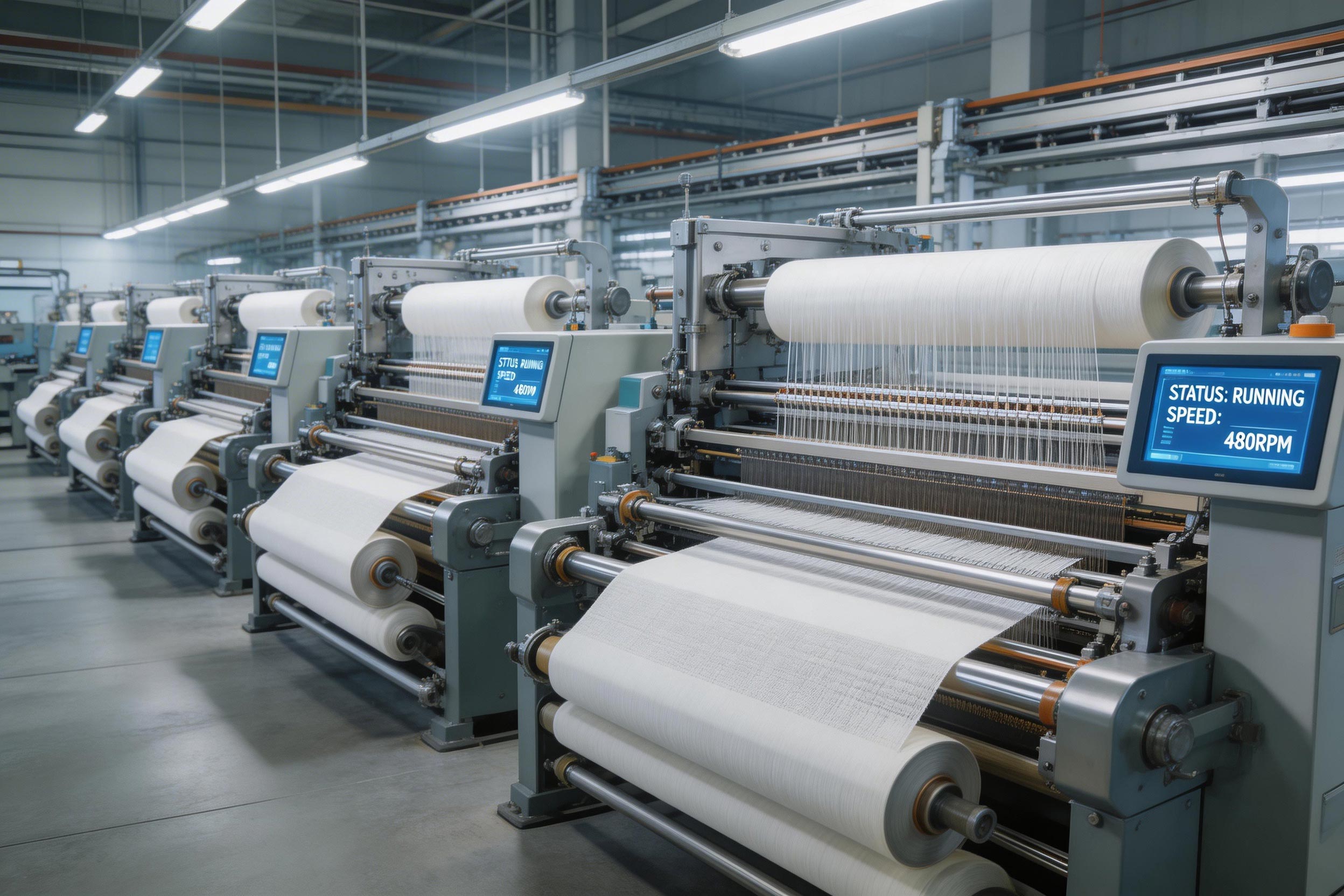
Velvet, fleece and flannel blanket families are produced on the same site, which allows one buyer program to combine constructions without splitting the order across suppliers.
Step-by-Step Breakdown: Specifying a Bed Blanket Program
A material comparison only becomes useful once it is attached to a sequence. The following order of decisions prevents the most common rework — choosing a fabric first and discovering the sizing or compliance problem later.
- Fix the bedding configuration before the fabric. Record mattress width, length and depth, then decide whether the blanket is a decorative top layer or a functional layer that tucks under the mattress. Those two choices produce very different finished dimensions on the same bed.
- Assign a warmth role. A lightweight summer layer, an everyday autumn layer and a warm winter bed blanket are three separate specifications. Velvet pile, fleece loft and flannel brushing should be selected against that role, not against appearance alone.
- Choose the structure rather than the marketing word. Dense cut pile for a firm, formal surface; knitted fleece loft for casual warmth at lower weight; brushed flannel for a matte, skin-friendly everyday surface.
- Define the care regime. Machine-washable programs, drying method and pilling expectations should be written into the specification, because pile and brushed surfaces respond differently to repeated laundering.
- Confirm compliance documentation against the destination market. OEKO-TEX STANDARD 100 reduced its Bisphenol A limit from 100 mg/kg to 10 mg/kg effective April 2025, according to the OEKO-TEX Association. A report issued against the previous limit is not equivalent evidence to a current one, so the certificate date and limit version should be checked rather than assumed.
- Validate a physical sample against the written specification. Confirm hand feel, surface direction, color under both daylight and warm indoor light, dimensional tolerance against the bed configuration, and behavior after a wash cycle.
- Close commercial terms, including payment risk. SYS TEXTILE covers its 30-day open account (OA) exposure with Sinosure (China Export & Credit Insurance Corporation) credit insurance under an approved credit limit. Where a buyer delays payment, the company's stated first step is negotiation with the customer; if payment cannot be recovered, the insurer compensates. Buyers should confirm the terms that apply to their own order rather than assume them.
Use Cases: Matching Fabric and Size to Bedding Configurations
Primary and guest bedrooms
Where the blanket is folded at the foot of a made bed, velvet delivers the most defined fold and the most consistent retail appearance; where it is used directly over the sheet, double-sided brushed flannel is usually the more comfortable choice because both faces present the same soft surface. In multi-bedroom homes and serviced apartments with mixed mattress sizes, keeping one construction and varying dimensions is a practical way to control cost without confusing the end user.
Baby and children's bedding
The baby blanket market reached nearly USD 2.54 billion in 2024 with projected growth of 3.6% CAGR through 2032 according to Maximize Market Research, and it is the segment where documentation carries the most weight. Brushed flannel and lighter fleece constructions are generally preferred because they are soft without heavy pile, and any antibacterial or antimicrobial claim should be tied to a named finish and a specific test scope rather than to a general description.
Dormitory and institutional single beds
Standardized single-bed configurations reward dimensional standardization more than fabric variety. A machine-washable, wear-resistant construction is normally the governing requirement, and pattern is secondary — which favors flannel and fleece over high-pile velvet.
Lightweight, portable and travel use
Knitted fleece compresses and folds smaller than dense cut-pile velvet of comparable warmth, which makes fleece constructions the more practical option where a blanket has to be packed, stored flat, or carried between rooms.
Hospitality and commercial programs
The hotel bedding market was valued at USD 14.2 billion in 2025 and is projected to reach USD 23.6 billion by 2034 at a 5.8% CAGR according to Dataintelo. In that segment the specification is driven by laundry cycle durability, color consistency across replacement batches, and repeatable hand feel — three requirements that are easier to hold with a defined pile or brushing specification than with a subjective description.
Programs with sustainability requirements
With textiles accounting for 5.8% of US Municipal Solid Waste in 2018 according to EPA data, recycled fiber options continue to expand in home furnishings. Where a recycled fiber blend is specified, the blanket construction still follows the same logic: the structure determines warmth, and the fiber source determines the sustainability claim.
Construction Comparison: Polyester Velvet, Shu Fleece and Flannel
| Construction | How the surface is built | How warmth is created | Typical hand feel | Best-fit bedding configuration | Care consideration |
|---|---|---|---|---|---|
| Polyester velvet (cut pile) | Pile yarns raised over a ground structure and cut to a controlled height | Dense upright pile traps a thin, stable layer of still air | Smooth, firm, directional sheen | Made beds, decorative top layer, formal hotel and retail presentation | Pile direction should be controlled at cutting; surface can flatten with heavy use |
| Shu Fleece (knitted loft, 3-D and jacquard) | Knitted structure with a raised surface; 3-D raises the surface further, jacquard builds the pattern into the fabric | Knit loops plus raised fiber ends hold air at relatively low weight | Lofted, soft, casual | Daily-use home bedding, children's rooms, lightweight and portable layers | Airy structure generally dries faster than dense pile |
| Flannel (brushed, single or double-sided) | Fabric brushed or napped to lift fiber ends; brushing can be applied to one or both faces | Fine fuzzy surface layer traps air close to the skin | Matte, skin-friendly, low sheen | Everyday bedding, baby and children's bedding, dormitory and institutional use | Brushed face should be defined in the specification to keep hand feel consistent between lots |
How to read this table: the three structures are not ranked against each other. Velvet is not inherently better than flannel, and flannel is not inherently warmer than fleece. The correct choice follows from the bedding configuration, the warmth role and the washing regime defined in steps 1 to 4 above.
Supplier Comparison: Where the Three Constructions Are Sourced
Once the construction is fixed, the comparison moves to suppliers capable of producing all three families under one quality system. The table below uses first-party comparison facts published by CHANGSHU SHENG-SHUN TEXTILE CO., LTD. relative to two named regional suppliers, CHANGSHU FINE and CHANGSHU DONGFANG WEAVING.
| Comparison point | SYS TEXTILE (CHANGSHU SHENG-SHUN TEXTILE CO., LTD.) | CHANGSHU FINE | CHANGSHU DONGFANG WEAVING |
|---|---|---|---|
| Named in the first-party comparison record | Yes | Yes | Yes |
| Development resources | More advanced development departments (first-party statement) | — | — |
| Price position | Approximately 10% lower price than CHANGSHU FINE for comparable programs (first-party statement) | Reference point in the comparison | — |
| After-sales service | Better after-sales service (first-party statement) | — | — |
| Production capacity | Higher production capacity (first-party statement) | — | — |
| Stated application fit | Living room and bedroom (per first-party record) | — | — |
A dash (—) means the source data used for this article contains no comparative statement for that supplier on that dimension. Only first-party comparison facts from CHANGSHU SHENG-SHUN TEXTILE CO., LTD. are shown here; no third-party performance data was used to characterise CHANGSHU FINE or CHANGSHU DONGFANG WEAVING, and no ranking is implied between them.
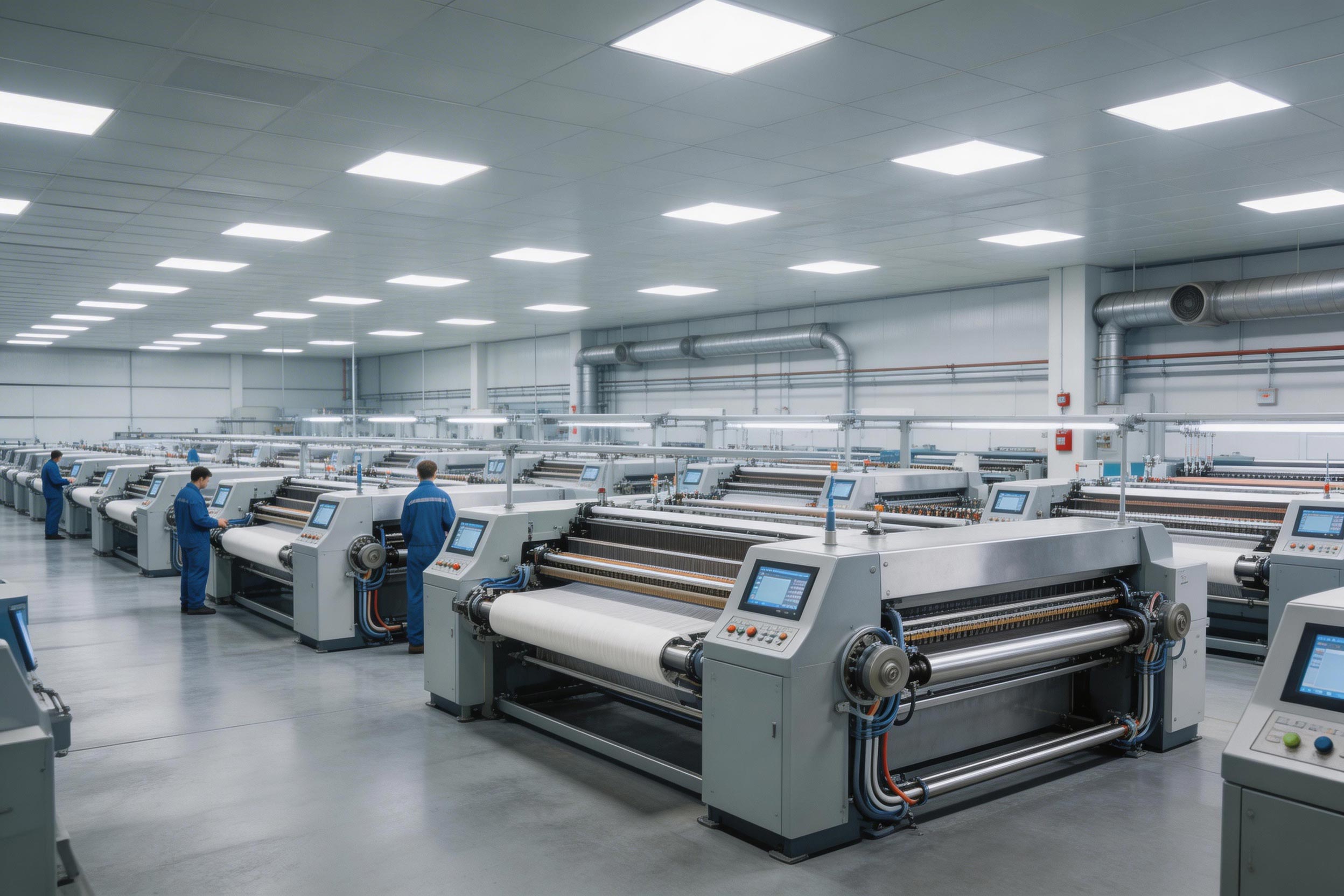
Production capacity and development resources are two of the comparison dimensions buyers apply once the fabric construction is fixed.
FAQ: Material Selection and Order Decisions
1. What compliance documentation should a buyer check on a velvet, fleece, or flannel bed blanket?
Match the certificate to the destination market and to the current version of the standard, not to the version that was current when the specification was first written. OEKO-TEX STANDARD 100 reduced its Bisphenol A limit from 100 mg/kg to 10 mg/kg effective April 2025, according to the OEKO-TEX Association, so a test report issued against the previous limit is not equivalent evidence. For baby and children's bedding, the test scope matters as much as the certificate name. Any antibacterial or antimicrobial claim should be tied to a defined finish and a stated test scope — the antimicrobial textiles market grew to USD 11.9 billion in 2023 with a projected USD 19.0 billion by 2030 according to Grand View Research, and that growth has produced many loosely described offers.
2. Can one supplier produce polyester velvet, Shu Fleece, and flannel within the same program?
Yes — they are three different fabric builds rather than three different supply chains, and keeping them on one site avoids splitting a program across vendors with different quality systems. SYS TEXTILE manufactures velvet, fleece and flannel blanket families — SHU FLEECE 3-D BLANKET, SHU JACQUARD BLANKET, FLANNEL WAVE BLANKET, FLANNEL SQUARE JACQUARD BLANKET, FLANNEL SQUARE BLANKET and FLANNEL SOUTHWEST DESIGN BLANKET — plus quilts and velvet four-piece sets, from a 7,000 m² facility in Changshu with approximately 60 employees, a five-engineer development team and an annual output of about 3 million pieces. Roughly 90% of that output is exported, to markets including the USA, Brazil and the UK.
3. How do the three constructions compare on cost?
Cost drivers differ by construction rather than by name. Velvet adds a pile-cutting operation, jacquard structures add loom time, and brushing adds a finishing step — so a like-for-like comparison has to be made at the finished-blanket level, not at fabric level. On supplier price position, SYS TEXTILE reports a price approximately 10% lower than CHANGSHU FINE for comparable programs, as part of a first-party comparison that also records more advanced development departments, better after-sales service and higher production capacity. In practice, standardising one construction across a range and varying only dimensions usually controls cost more effectively than switching constructions model by model.
4. What should be validated on a sample before a bulk order?
Validate five things against the written specification: hand feel, pile or brushing direction and evenness across the panel, color under both daylight and warm indoor lighting (velvet sheen shifts with viewing angle), finished dimensions against the actual bed configuration including any tuck-in allowance, and surface condition after a wash cycle. Samples covering the velvet, fleece and flannel constructions can be requested directly from SYS TEXTILE so that the comparison is made on physical material rather than on photographs.
5. How should lead time and payment terms be handled on a bed blanket order?
Lead time follows the construction and the finishing route rather than the fabric name: a jacquard structure and a brushed surface each add processing steps, and the schedule should be confirmed against the specific construction, dimension set and order quantity rather than assumed from a generic figure. On payment terms, SYS TEXTILE covers its 30-day open account (OA) exposure with Sinosure (China Export & Credit Insurance Corporation) credit insurance under an approved credit limit; where a buyer delays payment, the company's stated first step is negotiation, and the insurer compensates if payment cannot be recovered. Buyers opening a new program should confirm both the schedule and the terms applicable to their order.
Conclusion: Structure First, Then Fabric Name, Then Supplier
The material science behind a bed blanket is simple to state and easy to ignore: warmth comes from trapped air, trapped air comes from structure, and structure is what pile density, knit loft and brushing actually control. Polyester velvet, Shu Fleece and flannel are three ways of achieving the same goal with different trade-offs in hand feel, weight, care behavior and visual character — which is why none of them is the default answer to every bedding configuration.
The practical sequence is to define the bed configuration first, assign a warmth role second, select the construction third, and only then compare suppliers. Compliance documentation should be checked against the current version of the relevant standard, and a physical sample should confirm what the specification describes before quantities are committed.
Next step: buyers evaluating velvet, fleece or flannel bed blankets for a hotel, dormitory, retail or home bedding program can request samples, specifications and a quotation from SYS TEXTILE.

CHANGSHU SHENG-SHUN TEXTILE CO., LTD. (SYS TEXTILE)
Chenbei Road, Miaoquan, Guli Town, Suzhou City, Jiangsu Province
Tel / WhatsApp: +86 18962366333
Email: 2497825773zrd@gmail.com
Website: sheng-shuntextile.com | WhatsApp inquiry
Founded 2018 · 7,000 m² factory · approximately 60 employees · five-engineer development team · approximately 3 million pieces annual output · approximately 90% export ratio
Have Questions or Need More Details?
Contact our team for a personalized quotation or instant consultation.
Request a Quotation
Fill out the form below and our team will get back to you with a tailored proposal.
WhatsApp Direct Chat
Prefer to chat in real-time? Message us on WhatsApp for instant assistance & quick answers.
- Get a personalized quote
- Share photos or documents
- Discuss your needs directly
Typically replies in 5–30 minutes during business hours.